
Call for Chapters
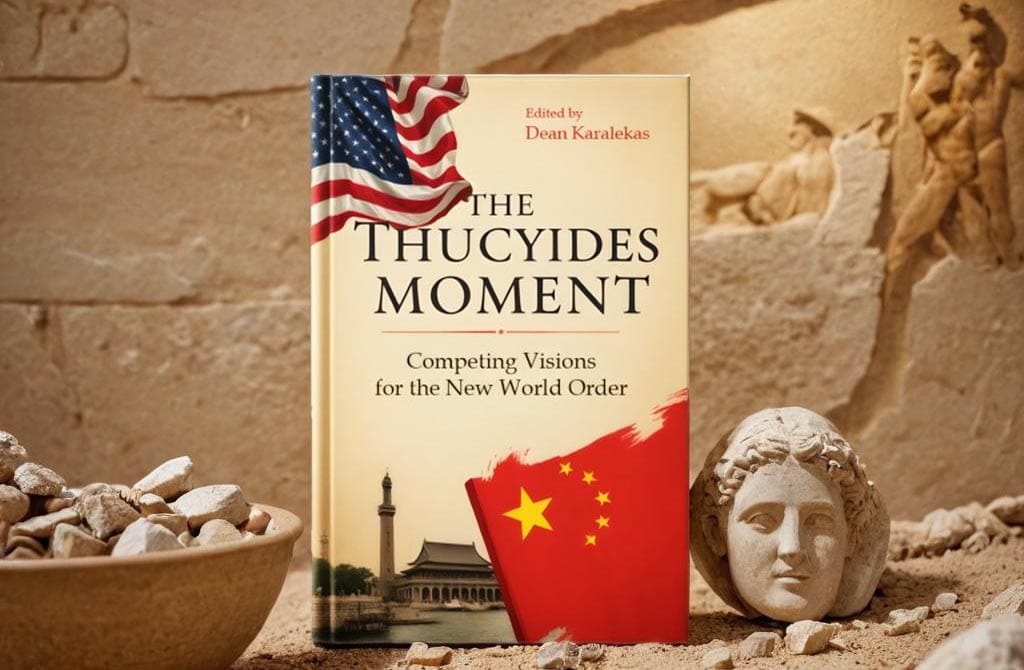
The Thucydides Moment
Competing Visions for the New World Order
Editor: Dean Karalekas
University of Central Lancashire
Preston, UK
向下滚动查看中文版。
Overview
The global geopolitical landscape is undergoing profound shifts, marked by the intensifying challenges to the US-led international liberal order by competing visions from rising powers. As the liberal order faces mounting pressure from non-Western ideologies and power structures, it becomes increasingly important to understand and analyze the contrasting models that might emerge as viable alternatives in a post-Westphalian global order. This edited volume aims to critically examine the competing visions for global governance and their implications for the future of international relations.
We invite scholars to contribute chapters to this interdisciplinary project, which will analyze these competing visions through two main lenses: the US-led liberal international order, and the Chinese alternative as articulated by leading Chinese International Relations (IR) theorists. Each section will explore the philosophical underpinnings, strategic objectives, and practical implications of these visions for global governance, security, and economic systems.
Objectives of the Volume
The current volume will be groundbreaking it that it will present the unfiltered views of Chinese thinkers, philosophers, and international political theorists, and provide a venue for them to describe the current state of IR thought in China to the wider academic world.
Much Western scholarship on international politics, security, and economics makes assumptions about the rise of China, and about that country’s growing global influence, based largely on the dangerous tendency toward mirroring and an insufficient effort to understand Chinese culture and its contribution to grand strategy and policymaking. This volume attempts to remedy that problem, and in so doing will become a valuable sourcebook for students, academics, and practitioners around the globe.
Further objectives include:
- To provide a comprehensive analysis of the decline of the US-led international liberal order and its foundational principles.
- To examine Chinese alternatives, including a sovereignty-centric approach, hierarchical global structure, and development-first strategy.
- To critically evaluate how these competing visions could reshape international institutions, economic systems, and global security in the medium- to long-term.
Proposed Structure of the Book
The volume will be divided into two main sections:
- The US-Led Liberal International Order
Suggested Chapter themes:
-
- Foundations and principles of the post-World War II global order.
- The role of liberal democracy, human rights, and free-market capitalism.
- Hegemonic Decline and the Illusion of Rules-Based Order: How global power centers are shifting away from US-led institutions.
- A CRT Perspective on the Liberal Order: How racial inequalities were embedded in the Bretton Woods system and capitalist global financial institutions.
- Intersectionality and Global Governance: How intersecting oppressions—race, gender, class—are perpetuated within international institutions.
- A Postcolonial Critique of US Foreign Policy: How US military interventions and foreign aid reinforce global hierarchies.
- The Failure of American Soft Power: Hollywood, Tech, and the New Cultural Revolt, and why the global South is rejecting US cultural influence.
- Alternative Visions from the Global Left: How socialist and leftist movements worldwide imagine a new international order.
Key contributions are sought from Western scholars specializing in liberal internationalism, democracy promotion, and multilateralism.
- China’s Rising Alternative Global Order
Suggested Chapter themes:
-
- Wangdao (王道) as a Model for Global Governance: How the Kingly Way has been reinterpreted from its classical roots to serve China’s modern foreign policy and global leadership future.
- The emergence of the Belt and Road Initiative (BRI) as a daobi (倒逼) response to Western economic dominance in global infrastructure.
- How does discourse on New Tianxia-ism (新天下主义) shape China’s diplomatic rhetoric and policies in global governance institutions?
- To what extent does China promote Socialism with Chinese characteristics (中国特色社会主义) as an alternative to Western liberal democracy in the Global South?
- Chinese Civilization (中华文明) as an alternative to Western universalism.
- How do Chinese IR scholars, policy elites, and state institutions operationalize Tianxia in narratives of multipolarity, sovereignty, and non-intervention?
- The role of Opening Up 2.0 (开放升级) and its emphasis on dual circulation (双循环) – balancing domestic economic strength with selective global engagement.
- Building a Community of Common Destiny (人类命运共同体): alignment with Chinese governance, infrastructure, and trade as a pathway to modernization and development of the Global South.
- The New Era (新时代) effort towards a Global Security Initiative (全球安全倡议), and the need for new global security norms, emphasizing state sovereignty and rejecting Western interventionism.
Other topics worthy of their own chapters include the following: cultural self-confidence (文化自信); New Confucianism (新儒家); heaven-human harmony (天人合一); The importance of depoliticization (去政治化); The party-state (党国).

Submission Guidelines
We welcome contributions from scholars, policymakers, and practitioners in the fields of international relations, political science, sociology, history, and related disciplines. Submissions should align with one of the sections outlined above and demonstrate original research and analysis.
We are especially interested in presenting the work of leading and early-academic scholars from the People’s Republic of China. To facilitate this, we welcome submissions in the Chinese language. Abstracts and chapters may be submitted in either English or Chinese, and the editors will provide translation services as required.
Abstract Submission: Please submit a 300–500 word abstract (in English or Chinese) outlining your proposed chapter, including the section it would fit into, the research question(s) addressed, and the chapter’s main argument.
Deadline for Abstracts: November 30, 2025
Notification of Acceptance: February 15, 2026
Full Chapter Submission: August 30, 2026
Chapter Length: Approximately 4,000–8,000 words (excluding references).
Submissions should be sent to: Globalorderbook[at]keemail[dot]me
Editorial and Peer Review Process
All submitted chapters will undergo a rigorous double-blind peer review process to ensure academic quality and coherence with the volume’s objectives.
Contact Information
For questions or further information, please contact:
Globalorderbook[at]keemail[dot]me
This volume seeks to serve as an essential resource for understanding the geopolitical transformation of the international system and the emerging competition between global orders. We look forward to your submissions!
论文征集
修昔底德时刻
新世界秩序的竞争愿景
概述
全球地缘政治格局正在经历深刻变革,美国主导的国际自由秩序正面临着来自新兴大国竞争性愿景的日益加剧的挑战。随着自由秩序承受来自非西方意识形态和权力结构的越来越大的压力,理解并分析这些可能成为后威斯特伐利亚全球秩序可行替代方案的对立模式变得尤为重要。本书旨在批判性地审视这些竞争愿景对全球治理及国际关系未来的影响。
我们邀请学者们为本跨学科项目撰写章节,该书将通过两个主要视角分析这些竞争性愿景:美国主导的自由国际秩序,以及中国国际关系(IR)学者所阐述的中国替代方案。每个部分将探讨这些愿景的哲学基础、战略目标以及在全球治理、安全和经济体系中的实际影响。
本书的目标
本书将是开创性的,因为它将呈现中国思想家、哲学家和国际政治理论家的未经滤镜的观点,并为他们提供一个向更广泛的学术界描述中国当前国际关系思想状态的平台。
许多西方关于国际政治、安全和经济的研究在很大程度上基于对中国崛起和全球影响力增长的假设,而这些假设往往源自危险的“镜像思维”倾向,并且对理解中国文化及其在大战略和政策制定中的贡献缺乏足够的努力。本书试图弥补这一问题,并因此成为全球学生、学者和从业者的重要参考书。
进一步的目标包括:
- 对美国主导的自由国际秩序及其基本原则的衰落进行全面分析。
- 研究中国的替代方案,包括以主权为中心的方法、分层全球结构和“发展优先”战略。
- 批判性评估这些竞争性愿景如何在中长期内重塑国际机构、经济体系和全球安全。
书籍结构
本书将分为两个主要部分:
第一部分:美国主导的自由国际秩序
建议章节主题:
- 二战后全球秩序的基础与原则。
- 自由民主、人权和自由市场资本主义的角色。
- 霸权衰落与规则秩序的幻象:全球权力中心如何从美国主导的机构转移。
- 批判种族理论(CRT)视角下的自由秩序:布雷顿森林体系和资本主义全球金融机构中嵌入的种族不平等。
- 交叉性与全球治理:种族、性别、阶级等交叉压迫如何在国际机构中延续。
- 后殖民对美国外交政策的批判:美国的军事干预和对外援助如何加深全球等级体系。
- 美国软实力的失败:好莱坞、科技和新的文化反叛,全球南方为何拒绝美国的文化影响。
- 全球左翼的替代愿景:社会主义和左翼运动如何想象新的国际秩序。
本部分的主要贡献者应为研究自由国际主义、民主推广和多边主义的西方学者。
第二部分:中国崛起的替代全球秩序
建议章节主题:
- 王道作为全球治理模式:王道如何从其古典根源被重新诠释,以服务于中国的现代外交政策和全球领导愿景。
- “一带一路”倡议(BRI)的崛起:作为对西方经济主导地位的倒逼反应。
- 新天下主义如何影响中国在全球治理机构中的外交话语和政策?
- 中国特色社会主义在多大程度上被推广为西方自由民主的替代方案,尤其是在全球南方?
- 中华文明作为西方普世主义的替代方案。
- 中国国际关系学者、政策精英和国家机构如何在多极化、主权和不干涉的叙事中操作天下观?
- 开放升级及其“双循环”战略——平衡国内经济实力与选择性全球接触。
- “人类命运共同体”:通过基础设施、治理和贸易合作促进全球南方现代化的路径。
- 新时代 的全球安全倡议:强调国家主权、拒绝西方干预的新全球安全规范。
其他值得深入研究的主题包括:文化自信、新儒家、天人合一、去政治化、党国。
提交指南
我们欢迎国际关系、政治学、社会学、历史及相关领域的学者、政策制定者和从业者提交稿件。稿件应符合上述书籍结构,并展示原创研究和分析。
特别邀请来自中国的学者投稿。为此,我们欢迎中文投稿。摘要和章节可用英语或中文提交,编辑团队将提供翻译服务。
摘要提交要求:
请提交300–500字摘要(英文或中文),概述拟议章节的研究问题、适用部分及主要论点。
- 摘要提交截止日期:2025 年 11 月 30 日
- 接受通知:2026 年 2 月 15 日
- 完整章节提交截止日期:2026 年 8 月 30 日
- 章节字数:约 6,000–12,000 字(不包括参考文献)
- 提交至: Globalorderbook[at]keemail[dot]me
编辑和同行评审流程
所有提交的章节将经过严格的双盲同行评审,以确保学术质量并与本书目标保持一致。
联系方式
如有问题或需要更多信息,请联系:Globalorderbook[at]keemail[dot]me
本书旨在成为理解国际体系地缘政治变革及全球秩序竞争的核心资源。我们期待您的投稿!